
Koliva
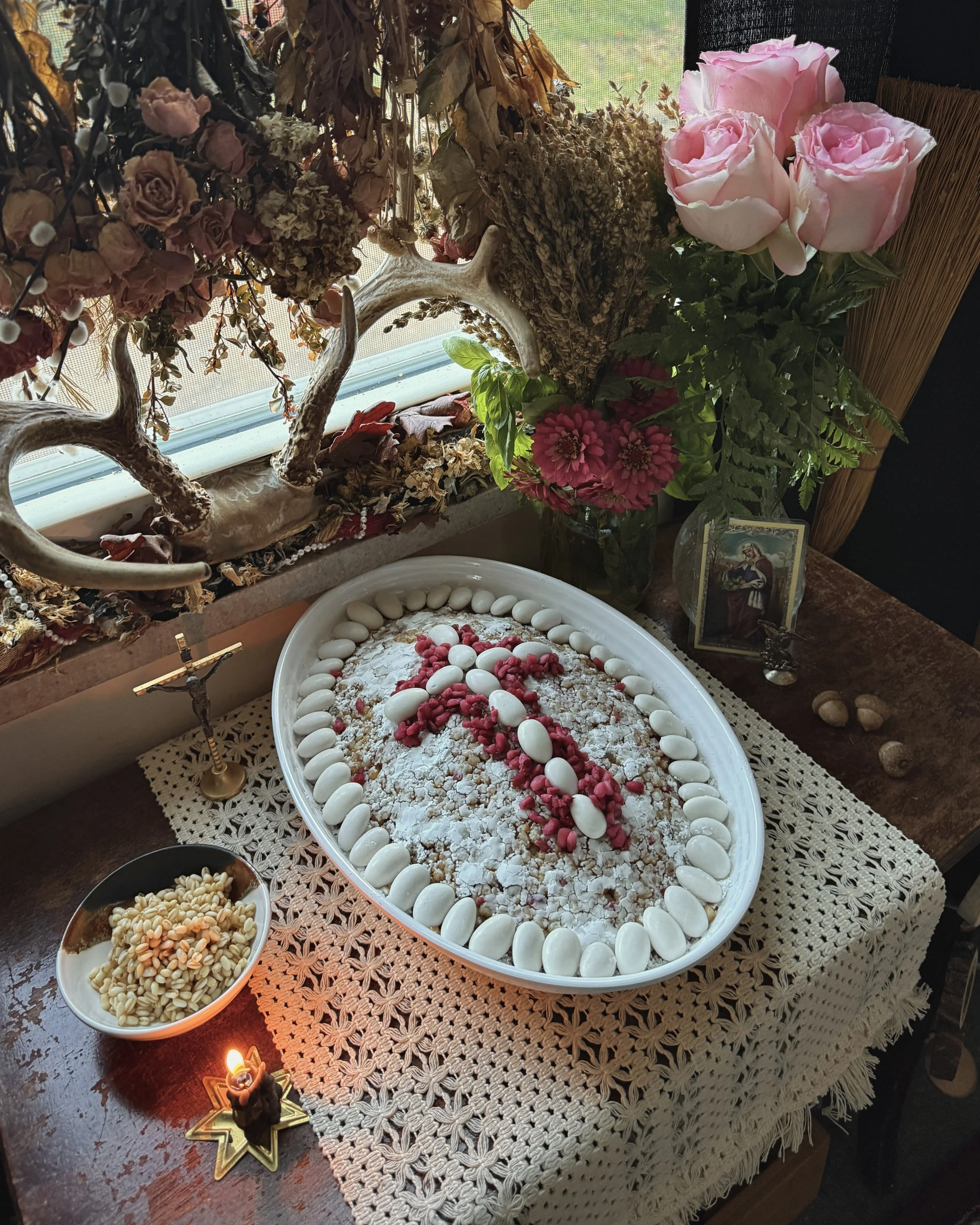
I made koliva yesterday, a symbolic dish served at funerals and an ancient tradition for remembering the dead. It was prepared for the memorial service for my husband’s grandmother, who passed away last week.
Koliva is a centuries-old custom in the Eastern Orthodox Church (from the Ancient Greek ‘kollivos’ or kernel). It’s prepared using nine ingredients, representing the nine ranks of angels:
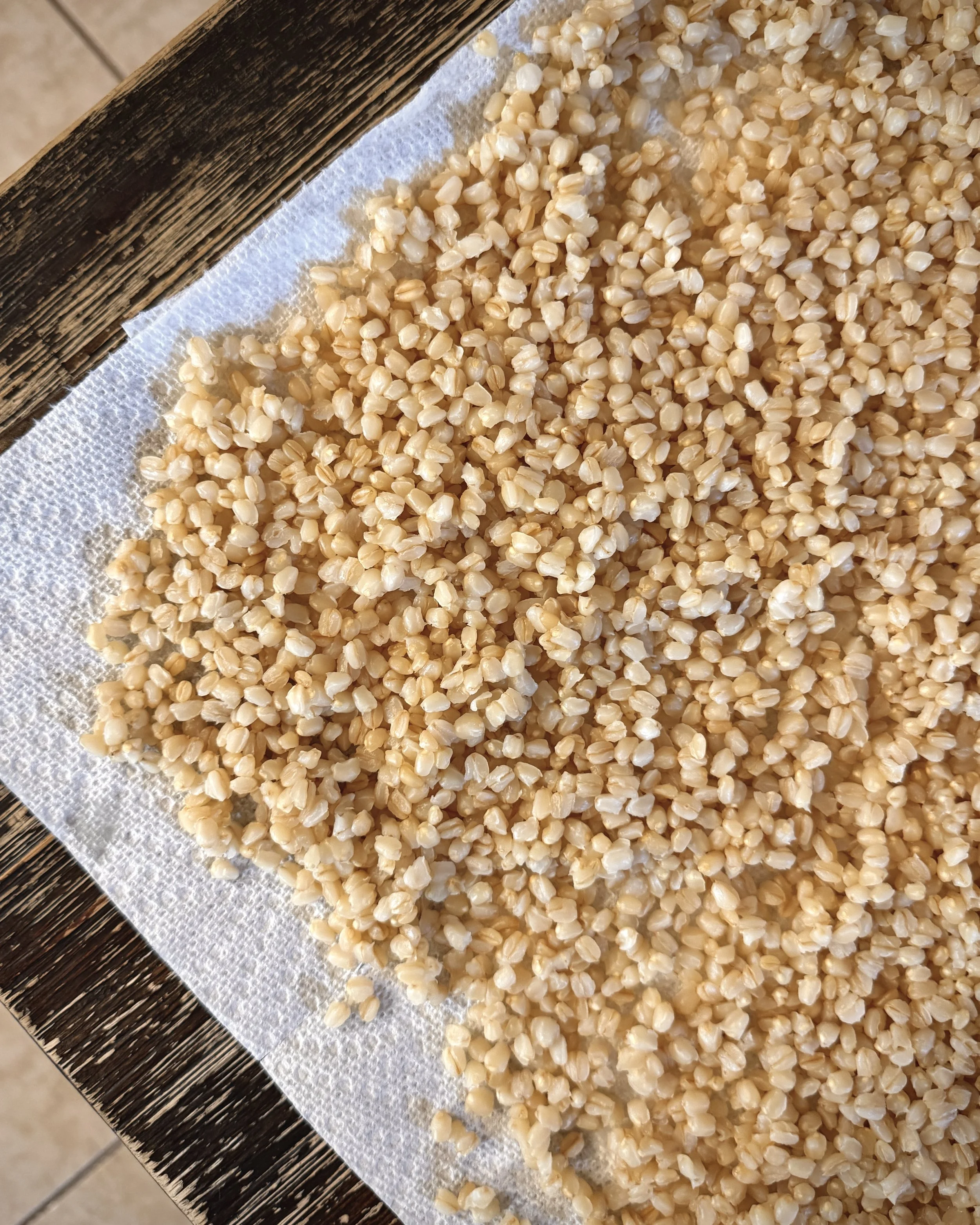
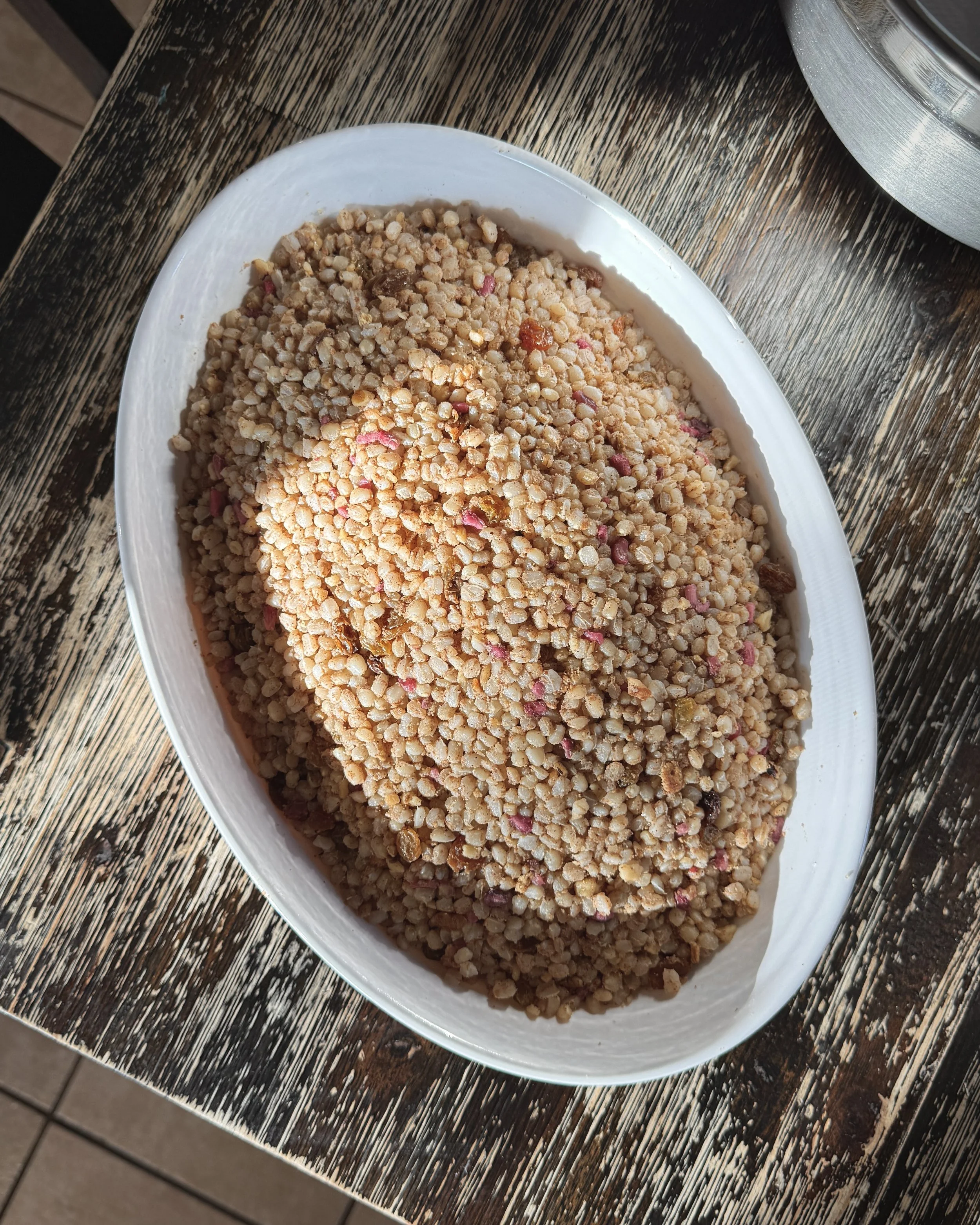
☙ Wheat: cycle of death, resurrection, and eternal life
☙ Pomegranate: love and paradise
☙ Graham cracker (or breadcrumbs): soil and earth
☙ Sugar: sweetness of heaven
☙ Raisins: Jesus as ‘the vine’
☙ Cinnamon and Allspice: richness of life
☙ Walnuts: reproduction
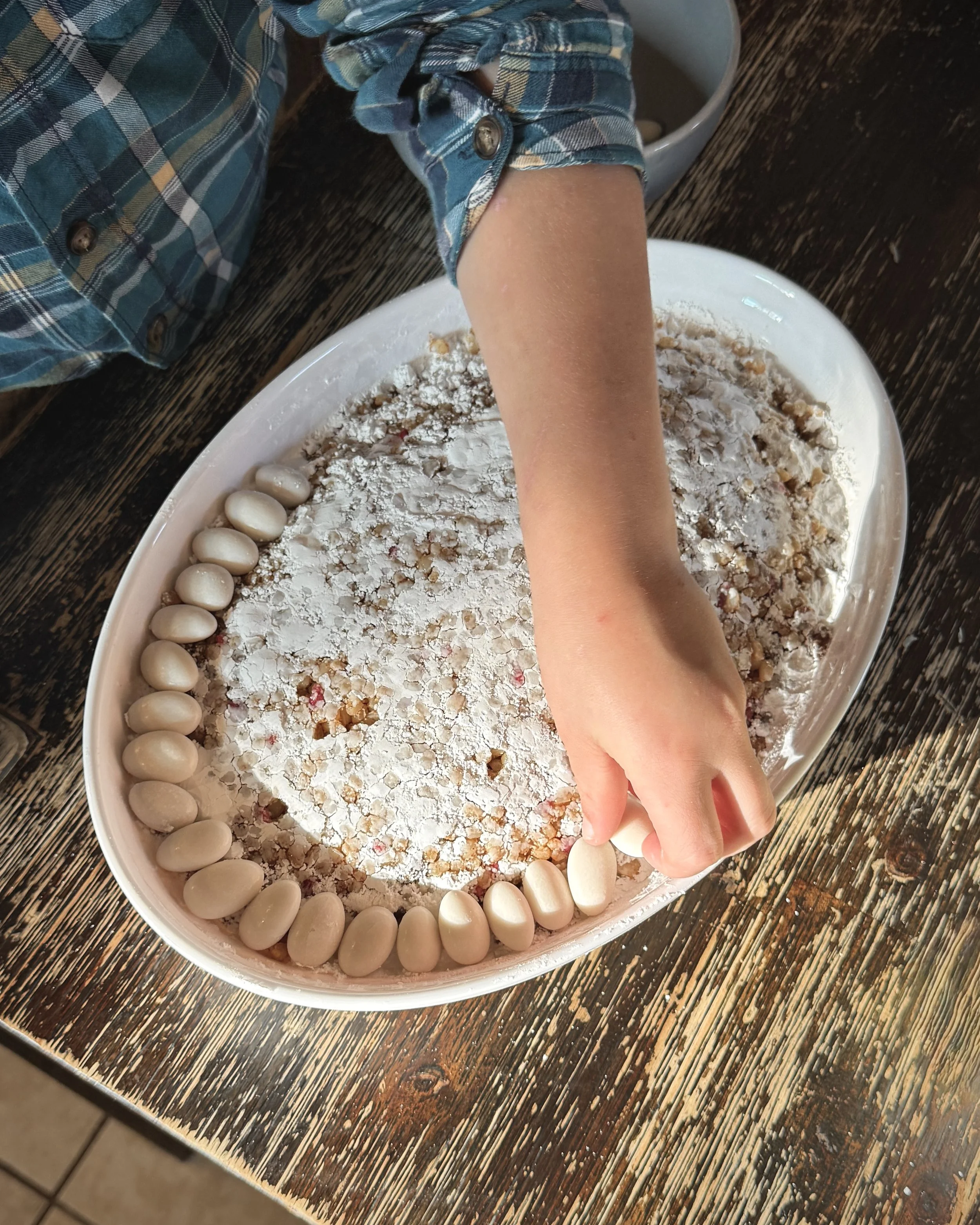
☙ Jordan almonds: bone, common fate
The ritual is slow and meditative, with the wheat needing to be soaked, boiled, and dried before everything is combined, covered in powdered sugar, and decorated—I’ve seen some really elaborate koliva. The finished dish is then blessed by a priest.
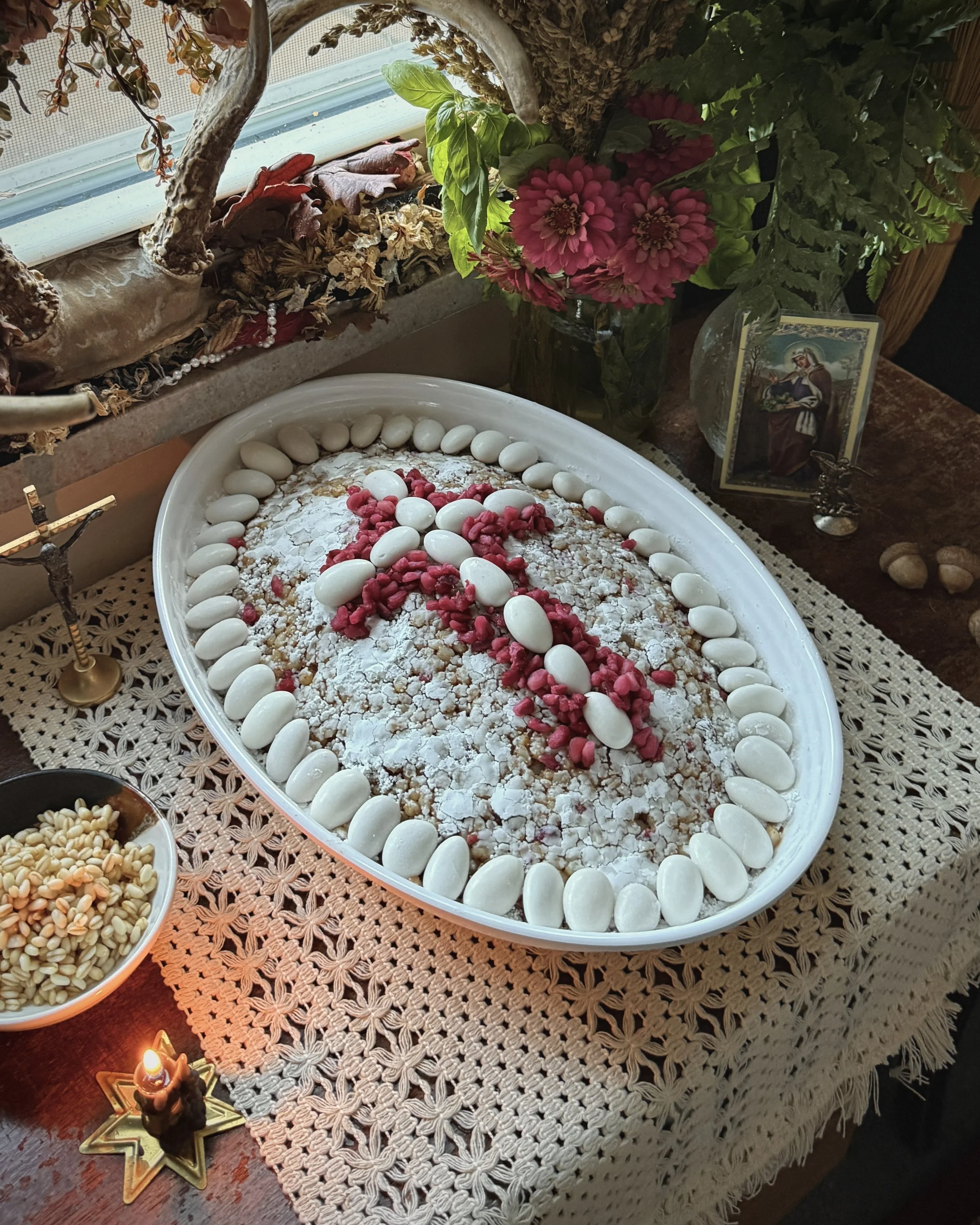
While the emphasis on wheat connects to John 12:24, the ancient Greek ritual dish ‘panspermia’ (a mixture of wheat, seeds, and nuts offered during fertility festivals), was also associated with the cycles of life, death, and rebirth.
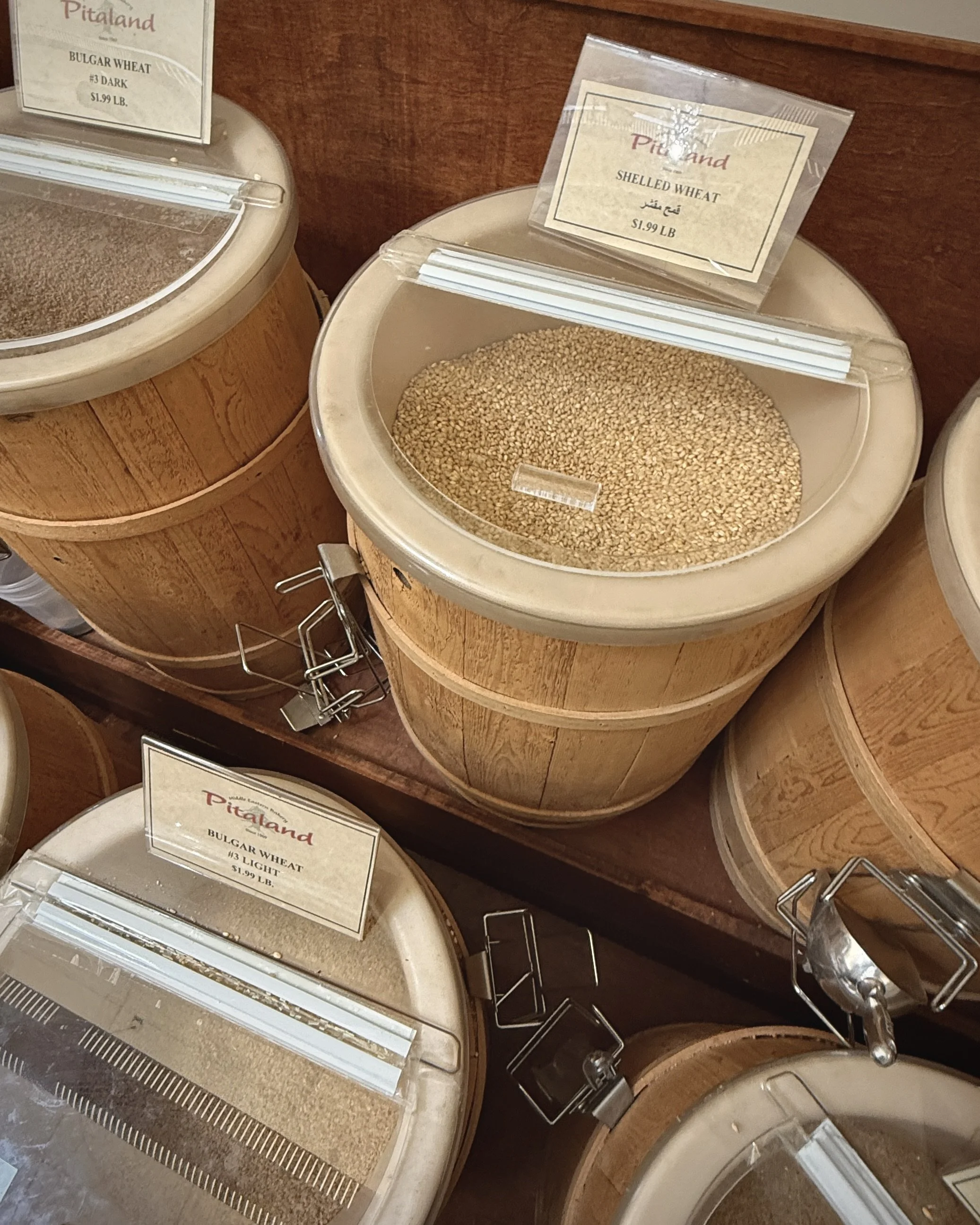
I was grateful to involve my family in this tradition, from gathering the ingredients to placing the almonds. I brought my kids down to my old neighborhood to pick up wheat berries from one of my family’s favorite shops growing up (back when it was called Chahine’s).
Koliva is also a common feature of All Souls celebrations, coming up on November 2nd.