
St. John's Day: A Guide for Midsummer
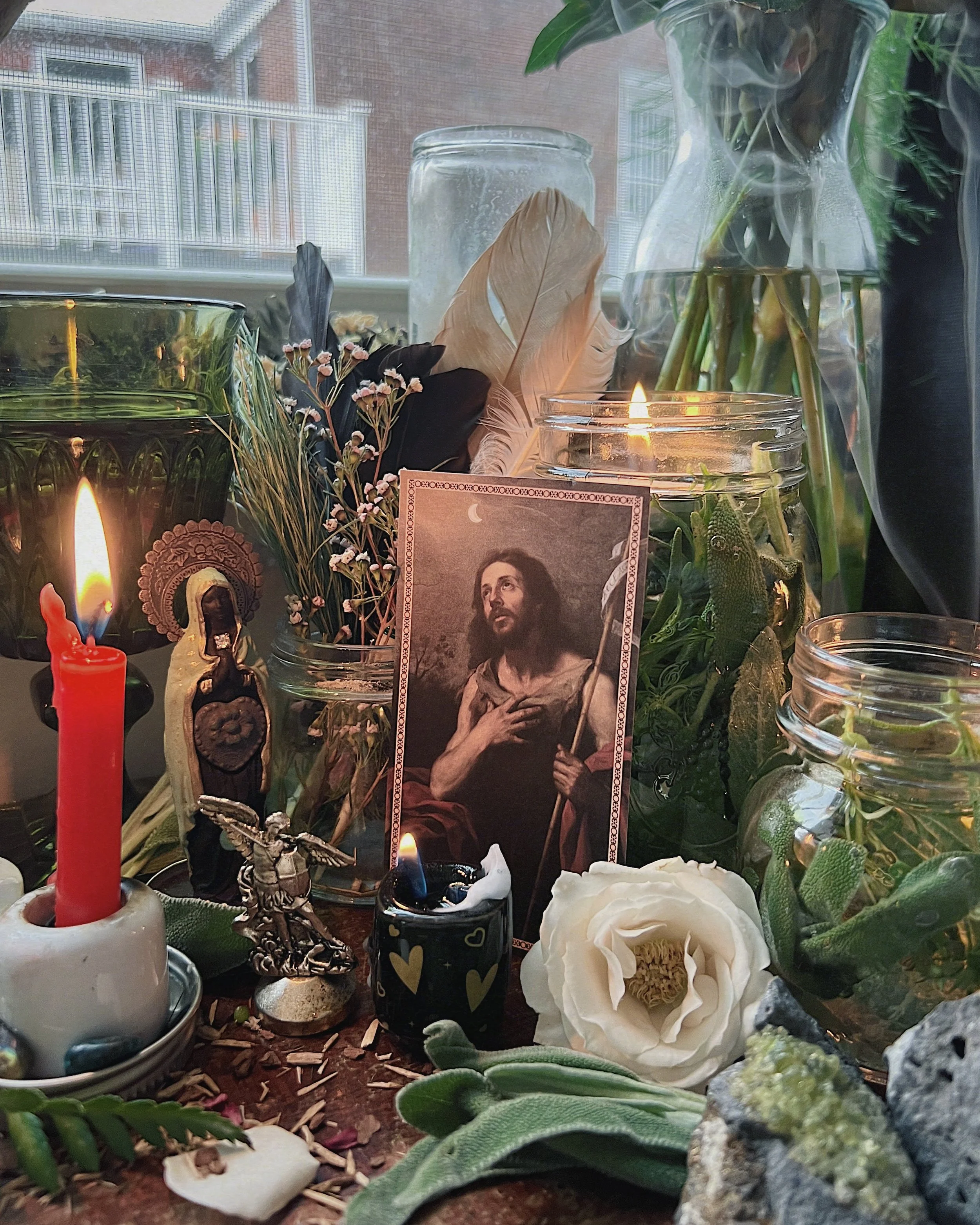
We’re just a few days away from John's Day’s Eve, one of the most magic-filled nights of the year. Coinciding with Midsummer, the celebration likely evokes images of flower crowns, bonfires, and maypoles. While you may center your festivities around the solstice (occurring this year on Sunday, June 21, at 4:24 A.M. EDT, also known as the pagan holiday Litha), Midsummer’s Day is traditionally held on June 24th.
You may also know that June 24th is the feast of Saint John the Baptist (interestingly, John’s big feast doesn’t commemorate the day he died, but rather, the day he was born) and, since its establishment in the 4th century, carries its own traditions, celebrations, and magic.
A brief background of John
John the Baptist is an incredibly beloved saint behind a variety of folk rituals. Like many of the saints we’ve discussed, his feast day was likely chosen to coincide with the widely-celebrated and sacred Midsummer celebrations.
Biblically, Saint John the Baptist was a Jewish prophet from Judea. His mother, Elizabeth, was a relative of the Virgin Mary, and both were pregnant at the same time. Luke 1:41 states that when the two expectant mothers met, the baby leaped within Elizabeth's womb as she was filled with the Holy Spirit. His birth was foretold by the angel Gabriel.
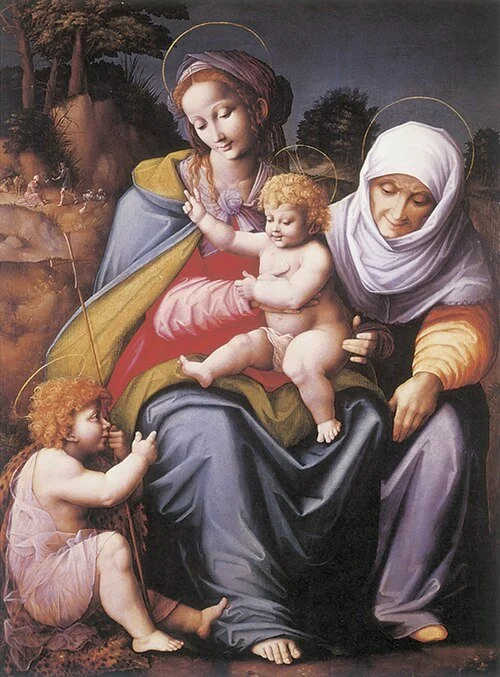
The Virgin and Child with Saint Elizabeth and John the Baptist by Francesco Bacchiacca
As a young adult, John lived in the desert as a hermit (or as part of a community of monks) and began to preach a message of repentance, eventually baptizing (and “paving the way for”) Jesus in the Jordan River. Crowds of hundreds came to hear him speak. He’s described as wearing a “camel’s hair” garment, secured by a leather belt, with a diet of locusts and wild honey. In Luke 7:28, Jesus declared John the Baptist to be the greatest man to have ever lived.
John was beheaded by Herod Antipas after publicly protesting his marriage to Herodias (Herod’s sister-in-law). One night at a celebration, Herodias’s daughter, Salome, danced so beautifully that she was granted a wish by her stepfather. Encouraged by Herodias, who still held a grudge, Salome demanded the head of John the Baptist on a platter. He was beheaded in 30 CE.
As mentioned above, John’s feast day was likely deliberately chosen to coincide with the solstice. An interesting fact from Judika Illes’s Encyclopedia of Mystics, Saints, and Sages relates to John’s quote about Jesus, “He must increase, but I must decrease.” According to the book,
“Saint Augustine pointed out the solstice symbolism in that statement, the metaphor for the waxing and waning sun. During the winter solstice, near Jesus’ birthday, the sun begins to wax, or grow greater, whereas during the summer solstice, near the birthday of John, the sun, at its peak, begins to diminish or wane.”
Due to his life and work, it’s easy to see why John would be closely associated with water magic. As with many saints, some of John’s folk remedies are inspired by his macabre manner of death, such as meditating on his severed head to relieve migraines, nightmares, or melancholy. But perhaps his most powerful attribute is his association with plants.
A patron of witches, midwives, and anyone who works with herbs, John is an excellent partner in herbology. You’ve likely heard of Saint John’s Wort, named in his honor, which has several magical properties, including protection against fire, demons, and ghosts.
Preparing for St. John’s Eve
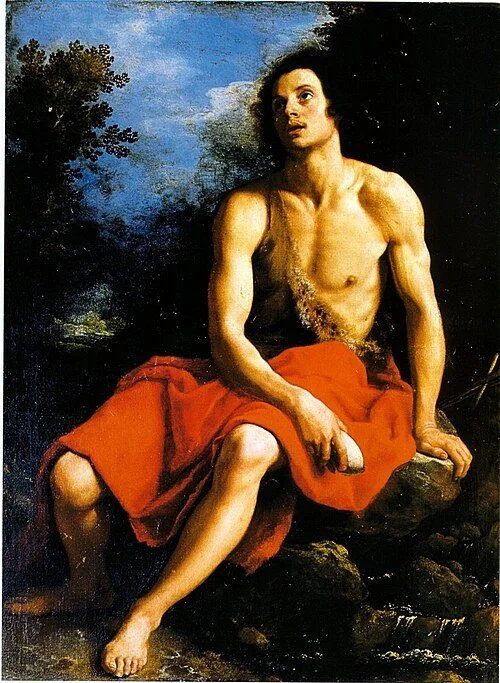
John the Baptist in the desert by Cristofano Allori
This week, in the northern hemisphere, we’ll experience the longest day of the year, with the sun at the height of its power. While we might automatically think of Halloween/Samhain as the most powerful holiday, Midsummer is equally charged.
One easy way you can take advantage of the solstice without much preparation is by gathering supplies between midnight and sunrise in the very early morning of June 24th. These might be plants for ritual, dew for beauty magic, or wood for tools. All of these elements will have more potent magical qualities when used over the course of the year, especially botanicals, which are strongest when harvested between these hours.
You might also use those particular hours for divination or a spiritual bath (incorporating as many plants as possible). If you aren’t able to gather with the local folk around a massive ritual fire, you could set a small one in a cauldron on your altar.
Here are a few more ways you can celebrate this week that will have lasting benefits as the days grow short.
St. John’s Herbs
Including Saint John’s Wort, there are seven plants known as the “Herbs of Saint John.” They are wormwood, mistletoe, hawkweed, mullein, mugwort, orpine, and, of course, Saint John’s Wort.
While these are the “official” plants, others associated with the Midsummer holiday include tarragon, lavender, parsley, sage, rosemary, thyme, and rue. You can use these plants (and/or any others that connect you with the solstice) in a variety of rituals on St. John’s Day and beyond—I’ve included a few ideas below.
Remember, harvesting between the hours of midnight and sunrise on the morning of the 24th will result in the most super-charged ingredients of the year.
Meeting with a Saint
St. John’s Eve is a prime night for dream divination, and you might use this opportunity to dream of John or another beloved saint. Place St. John’s Herbs under your pillow (or your personal Midsummer plant selections) and ask, if he’s available, to pay a visit. To invoke a different saint, repeat the same process with their favorite flowers (such as a bouquet of Mary’s flowers or carnations for Expedite).
Charm Bag
After tossing your combination of herbs in your ritual fire, whether it’s in your backyard or on your altar, spend time meditating on any important intentions or prayers. St. John’s Day is the perfect time to focus on animal protection, love, motherhood, growth, and success.
Allow the flames to burn out naturally. Once cool, collect the ashes and use them in a charm bag, bottle, charm, or talisman.
Saint John’s Water
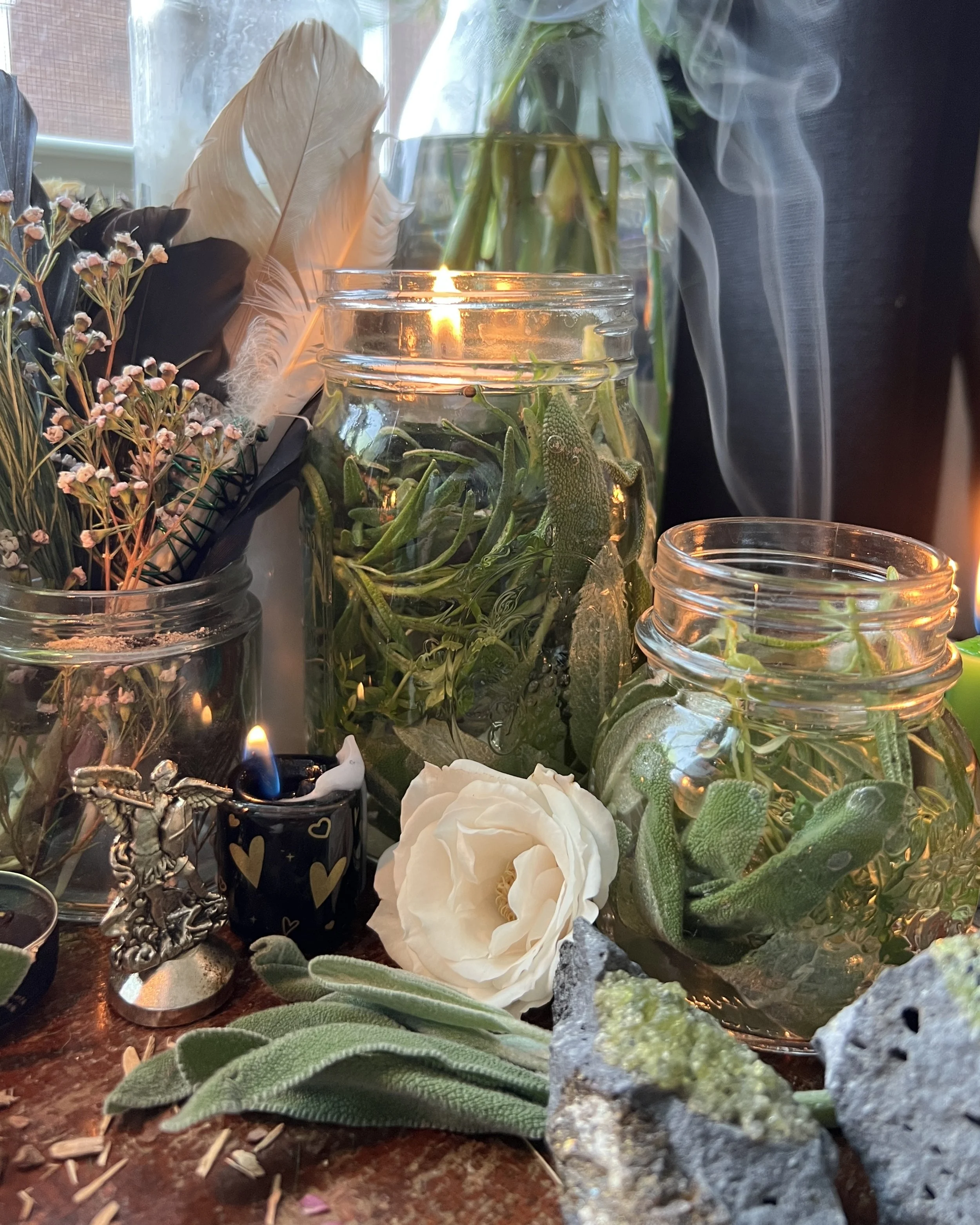
Similar to a full moon ritual, Midsummer’s Eve is also an ideal time for charging water or ritual oil. Fill your containers with oil or water and pack them with Saint John’s Herbs (or your preferred combination) and place them outside or on your windowsill after twilight. They must then be brought back indoors before twilight on the morning of the 24th. Strain and seal.
You can use your water or oil as you normally would in ritual, but it’s especially potent in protection magic, especially against the Evil Eye.
If you have a busy week on the horizon, do not stress about your weekend rituals. This time of year especially, it’s important to cultivate your own calm and joy, which will have the greatest benefit as we prepare once more for shorter days.
"Whoever has two coats must share with anyone who has none; and whoever has food must do likewise." —Luke 3:11